Crown of the Unholy
Residual Haunting
What remains after someone leaves but never truly disappears.
Read the StoryThe Haunted Archive
The words behind the mythology.
Explore the lyrics, symbolism, characters, memories, emotional ruins, and haunted worlds behind the music of Jen Hernandez.
Featured Song
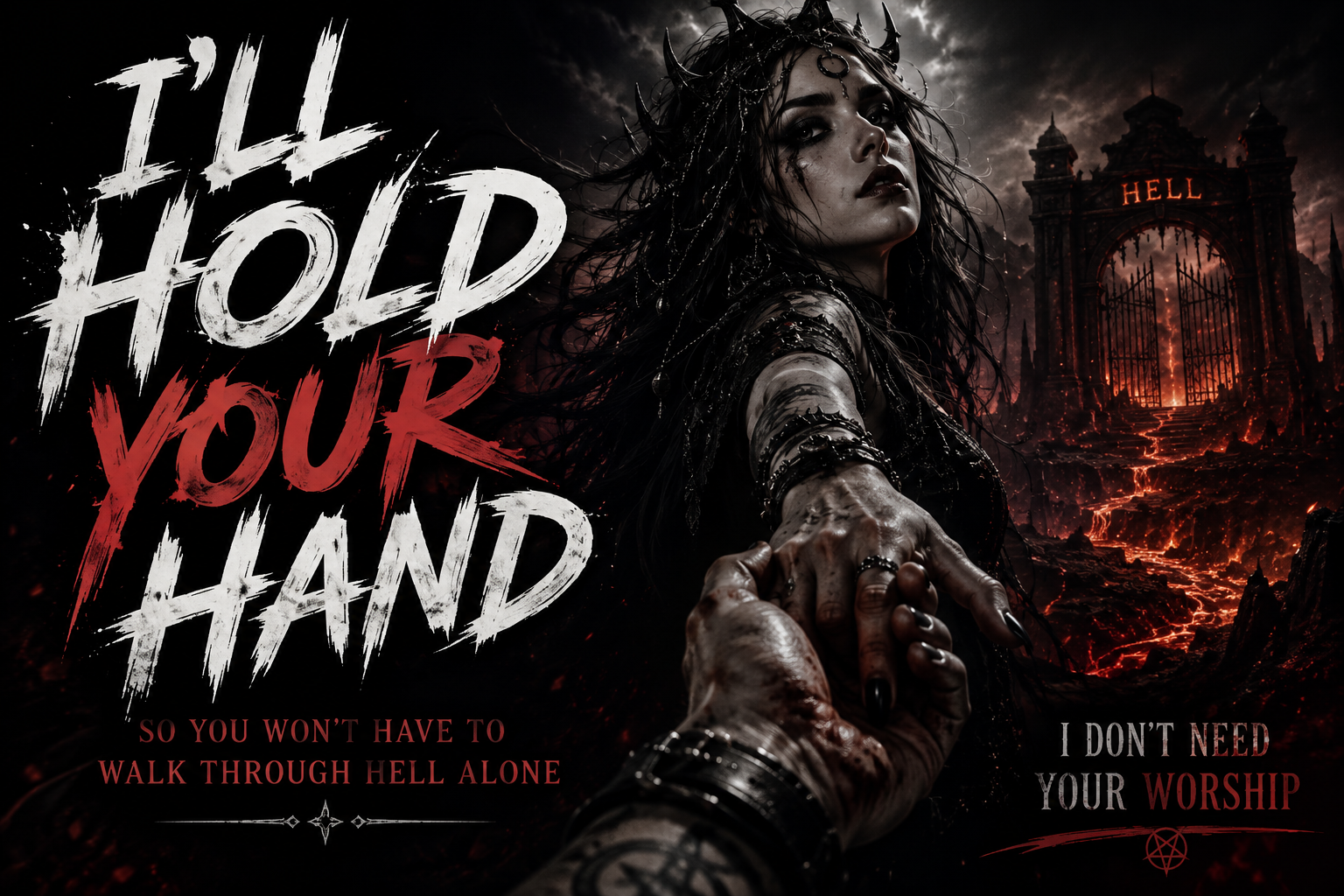
A promise to walk beside someone through Hell without demanding worship, obedience, or surrender in return.
“I’ll hold your hand through Hell.”
The song is told from the perspective of a powerful figure who offers protection without asking to be placed on an altar. It explores devotion that does not require possession and love that does not erase either person.
The sanctuary, altar, ruined empire, and journey through Hell function as symbols for emotional collapse, recovery, companionship, and power shared rather than surrendered.
Browse the Archive
Every album contains a different stage of the mythology, from destruction and survival to power, prophecy, and release.
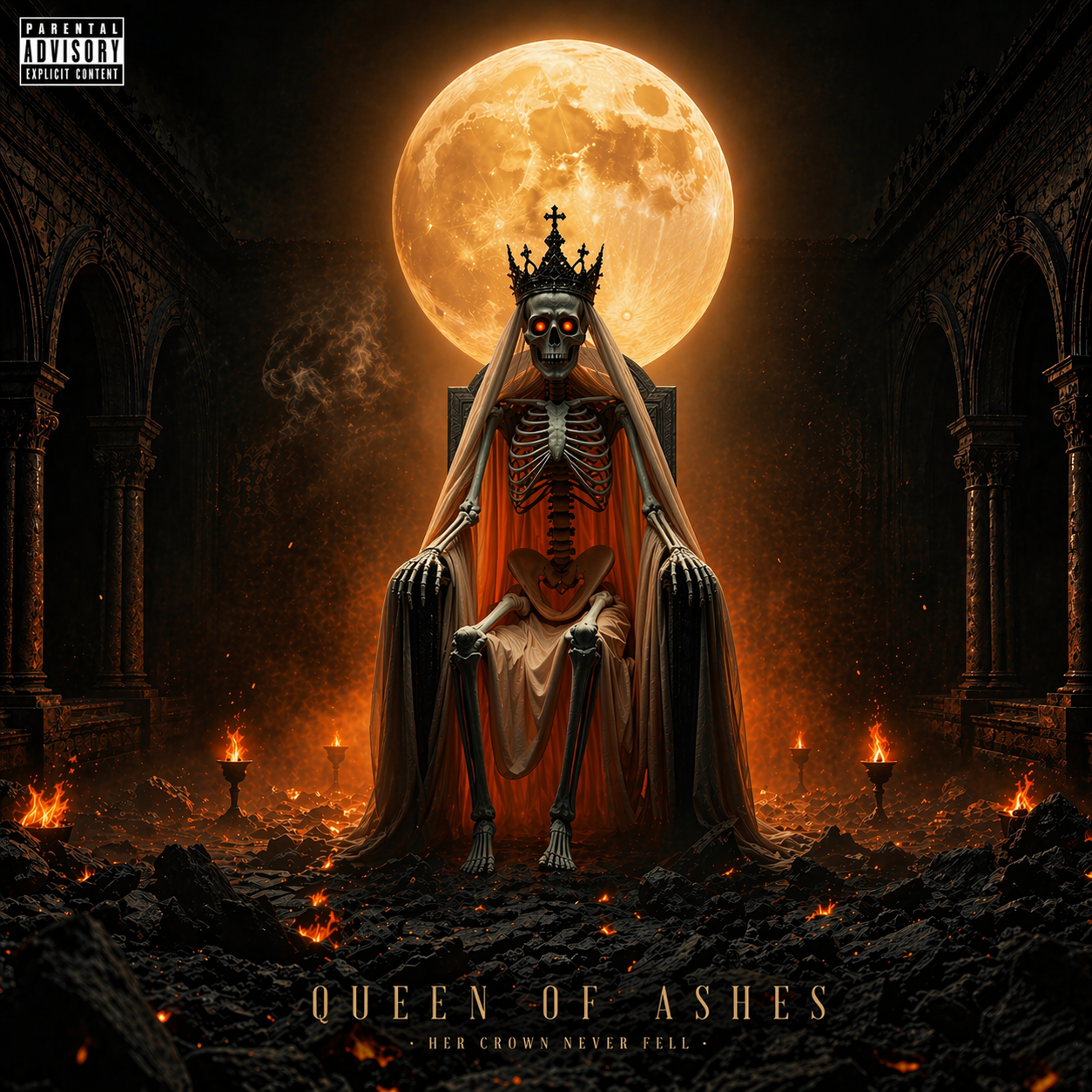
Album One
Destruction, survival, identity, and the first attempt to rise from what remained.
Explore Lyrics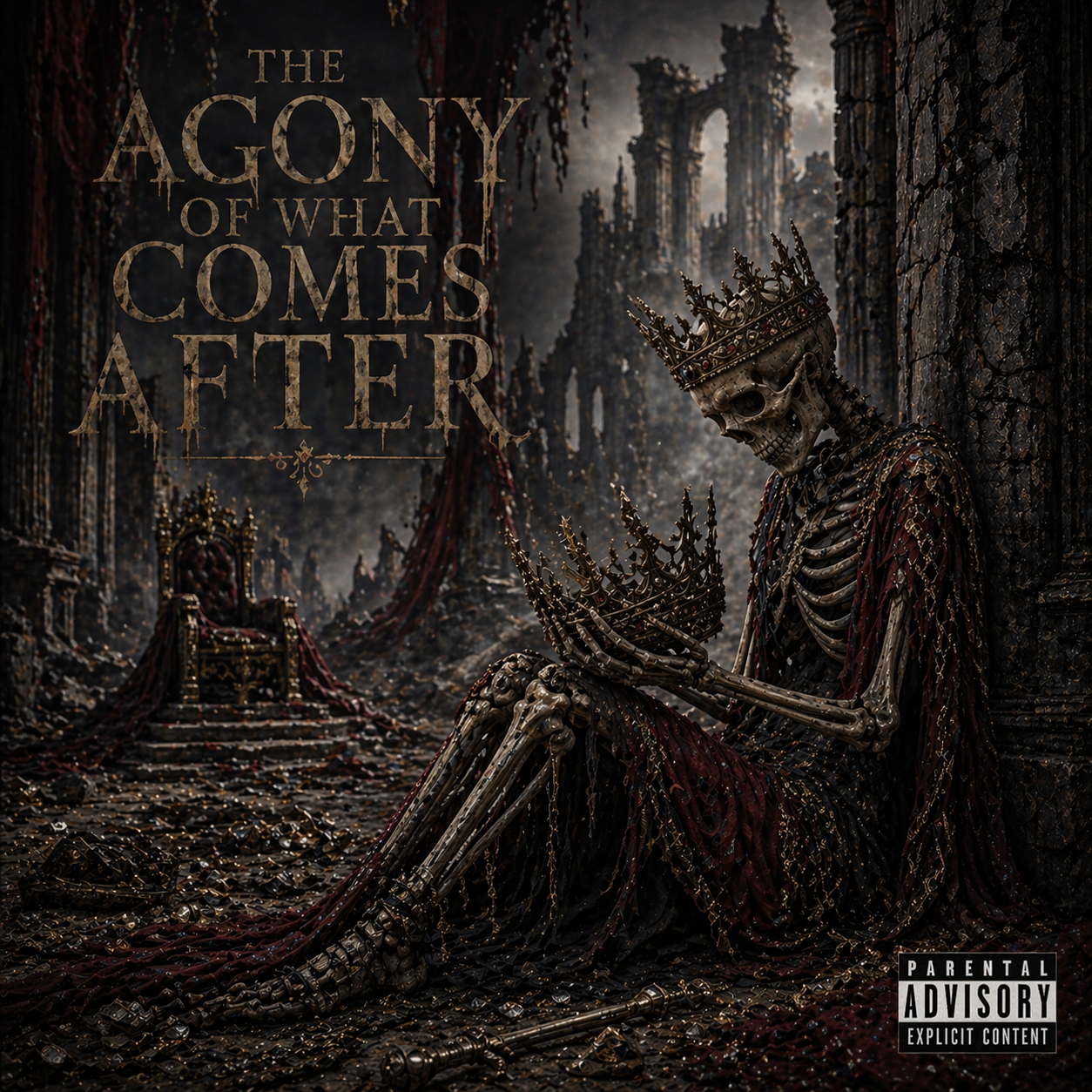
Album Two
The pain that remains when the immediate danger is gone but healing has not yet arrived.
Explore Lyrics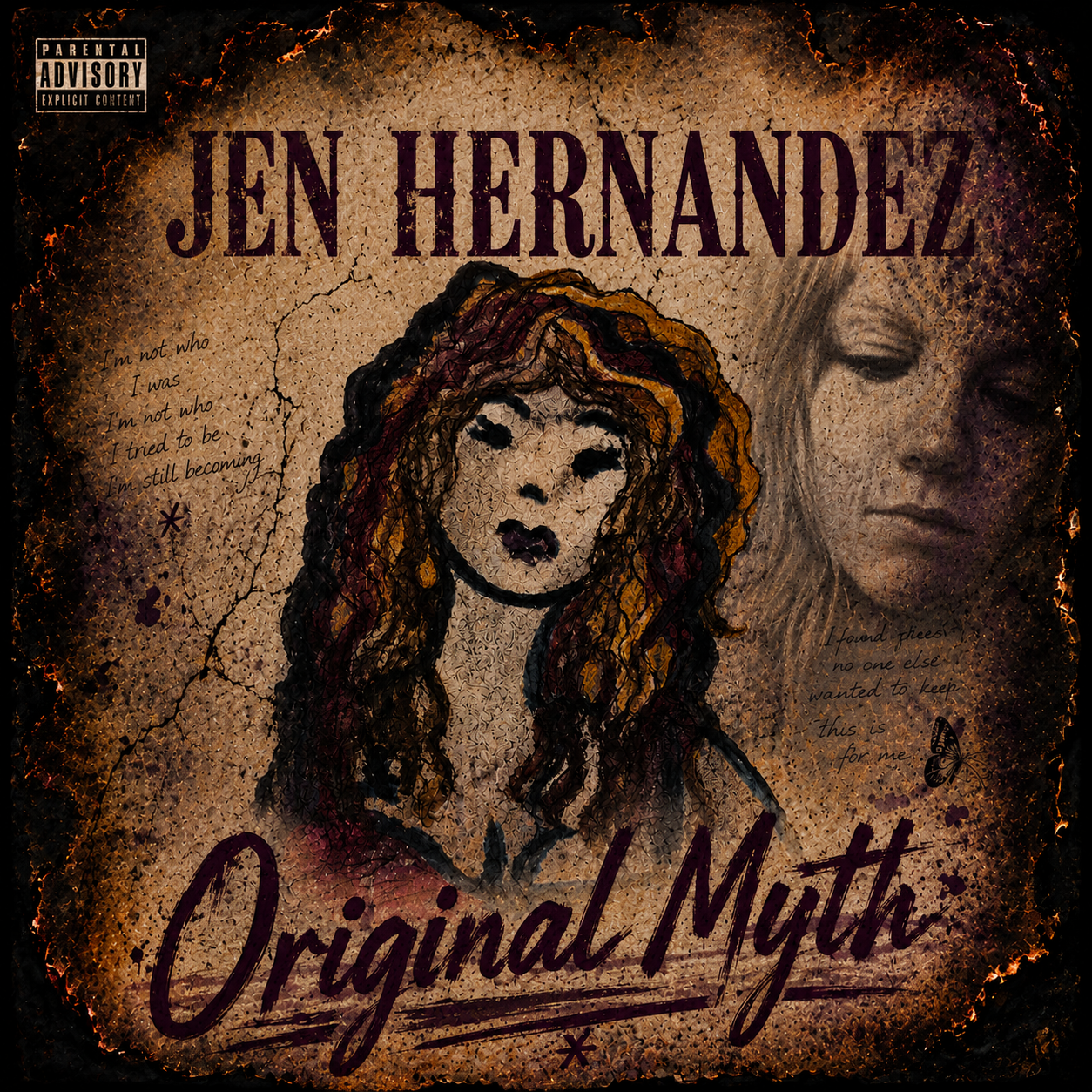
Album Three
Burned memories, fractured identity, and survival rewritten as legend.
Explore Lyrics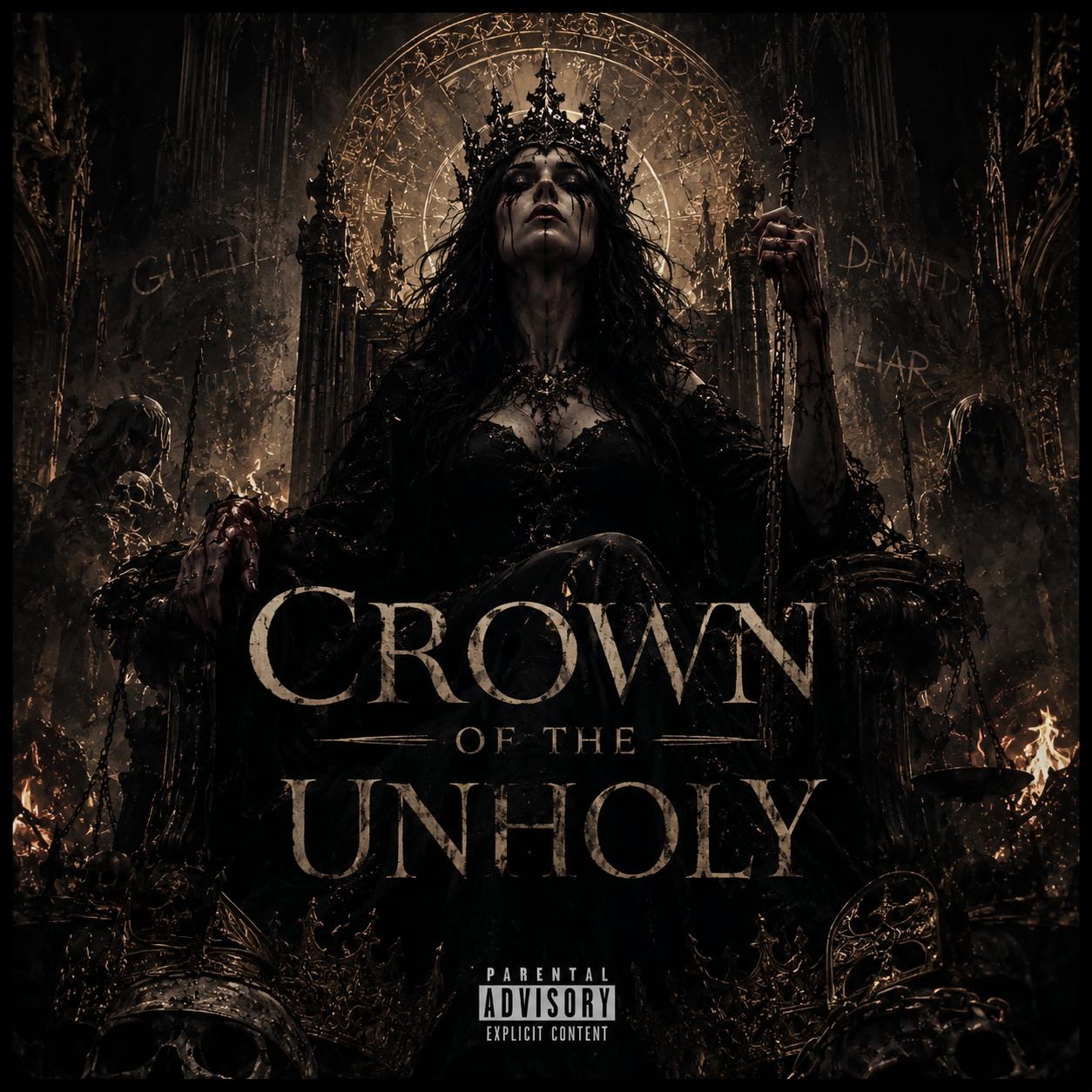
Album Four
Betrayal, rebellion, emotional resurrection, haunted sovereignty, and reclaimed power.
Explore Lyrics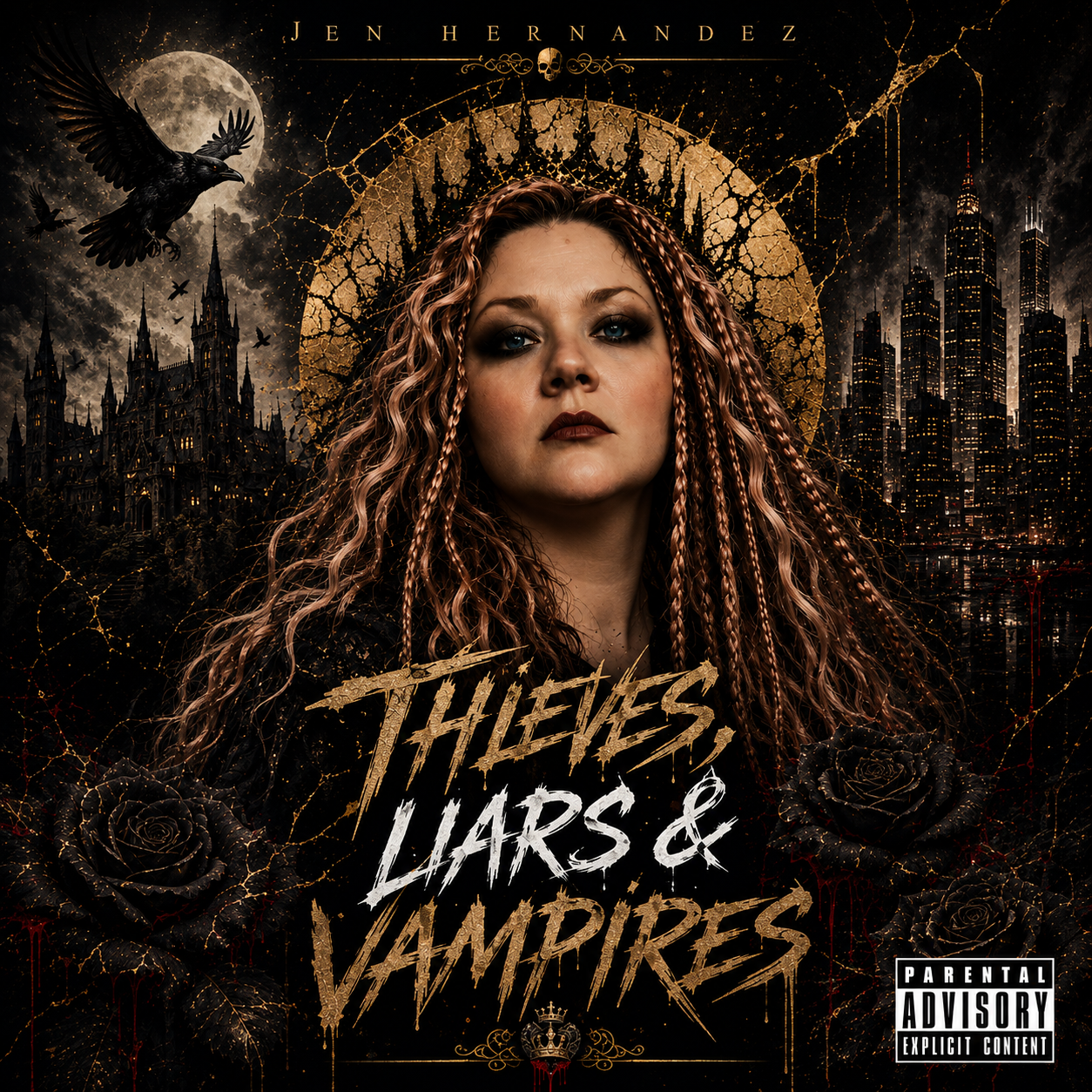
Album Five
Emotional predators, poisoned promises, ruined kingdoms, and dark prophecy.
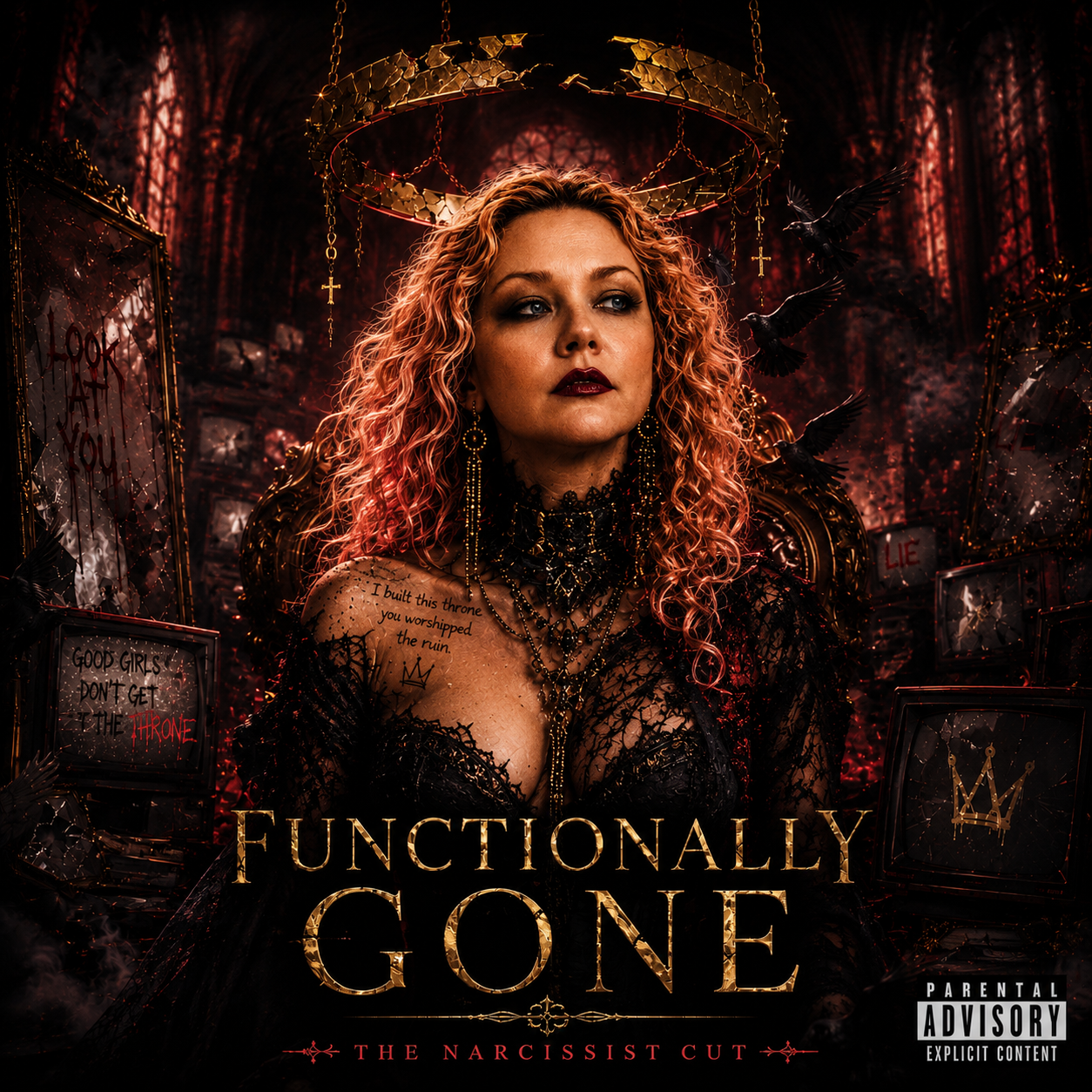
Album Six
Severed access, narcissistic mythology, emotional vacancy, and final detachment.
Enter Through a Song
Explore selected songs through their stories, themes, symbols, and emotional worlds.
Crown of the Unholy
What remains after someone leaves but never truly disappears.
Read the StoryCrown of the Unholy
Desire, danger, hunger, and control stripped of every polite disguise.
Read the StoryCrown of the Unholy
A declaration of sovereignty from someone who stopped asking permission to rule.
Read the StoryCrown of the Unholy
A confrontation with corrupted faith, broken promises, and sacred spaces turned hostile.
Read the StoryThieves, Liars & Vampires
A ruler clinging to power after the kingdom and everyone in it are gone.
New Release
Devotion without worship and protection without possession.
Read the StoryCrown of the Unholy
The fury of feeling betrayed not only by people, but by life itself.
Read the StoryCrown of the Unholy
The memory of someone becoming more powerful than the person ever was.
Read the StoryFunctionally Gone
The final boundary after every warning, explanation, and second chance has expired.
Song Story
The song begins with someone arriving at a sanctuary exhausted, grieving, and barely able to stand. The speaker recognizes both the person’s pain and the collapsing pride beneath it.
Rather than demanding worship or submission, the speaker offers companionship. The central promise is not to rescue the person from every consequence, but to remain beside them while they walk through it.
The sanctuary represents safety without ownership. The altar represents unhealthy devotion and the pressure to turn another person into something sacred.
Hell becomes the emotional journey through loss, shame, grief, and survival. The fallen empire represents the collapse of identity built around power or control.
Lyric Preview
“I don’t need your worship anymore.”
Full lyrics can be added here later or published on a dedicated song page.
Song Story
Residual Haunting examines what remains after a relationship ends. The person may be physically gone, but patterns, memories, reactions, and emotional reflexes continue to occupy the space.
The ghost represents emotional memory. The haunting is not supernatural. It is the way past experiences continue shaping present behavior long after the original source has disappeared.
Song Story
Bloodlust explores attraction after it crosses the line into consumption. Desire is presented as hunger, and intimacy becomes dangerous when one person views another as something to possess.
Blood represents intimacy and violence. Hunger represents emotional need that cannot be satisfied. The vampire becomes a symbol for anyone who survives by draining attention, love, labor, or identity from others.
A Guide to the Symbols
These images return across songs and albums, changing meaning as the story evolves.
Power, identity, burden, sovereignty, and the right to define oneself.
The remains of destruction and the material from which something new can be built.
People who consume attention, love, labor, or identity without becoming satisfied.
Memories and relationships that continue influencing the present after they end.
Devotion, sacrifice, worship, and the danger of placing another person above oneself.
Destruction, purification, judgment, rebellion, and rebirth.
Relationships, identities, families, systems, and the worlds people build together.
The remains of collapsed power, broken relationships, and abandoned identities.
Behind the Writing
Each song begins with an emotional truth, memory, character, conflict, or unanswered question.
The original experience is transformed through metaphor, mythology, melody, structure, and visual storytelling.
Real people become ghosts, kings, vampires, false gods, ruined saints, and abandoned empires. Relationships become kingdoms. Betrayal becomes prophecy. Survival becomes resurrection.
A memory, emotional conflict, or central truth.
The experience becomes rhythm, imagery, and voice.
Reality is transformed into symbols and characters.
Words, melody, performance, and atmosphere become one world.
Fragments from the Archive
“I don’t need your worship anymore.”
I’ll Hold Your Hand
“A throne in a wasteland.”
Throne in a Wasteland
“Some monsters never needed fangs.”
Thieves, Liars & Vampires
The Story Continues
The lyrics may begin with one story, but they belong to every listener who finds something familiar inside them.